Are Free Commercial Assets Worth It? The Truth About Print-on-Demand Freebies
Bootstrapping a high-volume print-on-demand business requires strict budget optimization. When you are trying to launch your first 500 listings across platforms like Redbubble and TeePublic, the upfront cost of purchasing premium graphics, vector packs, and custom typography can quickly stack up.
To bypass this financial hurdle, many entry-level digital creators rely heavily on digital giveaways and freebies.
A quick look at search trends reveals that thousands of active sellers monthly scour the web for options like creative fabrica freebies to stock their inventory vaults without spending a single dollar.
But can you actually build a sustainable, automated business engine on free resources? Or are you unknowingly exposing your digital storefronts to copyright strikes, pixelated renders, and account bans? Let’s dissect the reality of high-volume digital asset sourcing.
The Legal Trap Inside Standard Design Freebies
The single most dangerous mistake a print-on-demand entrepreneur can make is assuming that “free to download” translates to “free to sell.”
Ninety percent of the generic graphic design bundles distributed on public forums or personal design blogs carry a strict Personal Use Only license. If you place those graphics on a dark-colored hoodie or a coffee mug and generate a single sale, you are committing copyright infringement. Marketplaces utilize automated scanning algorithms to flag these assets, which can instantly shut down an established store.
Even when platforms offer legitimate commercial use freebies, they frequently come with production caps. For example, a font license might be free for your first 500 product sales, but requires a paid extended license the moment your automated store hits high-volume sales velocity. Tracking these distinct legal boundaries manually across a massive store catalog is an operational nightmare.
Leveraging Creative Fabrica Freebies Safely
Unlike unregulated design forums, utilizing structured premium platforms changes the operational equation.
When you source authenticated creative fabrica freebies, the platform applies their standard commercial legal framework to the download. This means you gain access to genuine, high-resolution vector files and typefaces that explicitly allow physical merchandise production.
Why Platforms Give Premium Assets Away
Marketplaces distribute daily gifts and curated free bundles for a very specific reason: it functions as a feature demo. They want you to experience how seamless it is to pull an SVG file into your cloud canvas, test it on your mockup generators, and see the conversion rates.
It is a highly effective way to build your early design pipeline, especially for testing micro-trends in niches like library culture or tabletop RPG graphics without risking capital.
The Scalability Ceiling: Moving Past Free Files
While building your initial storefront foundation with free download cycles is smart execution, you will eventually hit a structural growth ceiling.
Relying solely on rolling daily freebies introduces massive friction into your workflow:
- You waste hours checking multiple download pages every day.
- Your asset catalog becomes fragmented and disorganized.
- You cannot instantly pivot when a specific subculture trend starts blowing up on Pinterest.
To truly transform your operation from a manual clicking chore into a scalable enterprise, you have to centralize your design pipeline. Instead of piecing together random free elements, high-volume sellers unlock the entire cloud vault to batch-download thematic asset arrays on demand.
Before you invest your hard-earned revenue into any premium library, read our strategic breakdown: Creative Fabrica vs Envato Elements 2026: The Ultimate POD Subscription Battle. We thoroughly analyzed the asset depth, pricing metrics, and automated workflows of both giants so you can choose the exact system required to scale your business cleanly.
How to Audit and Clean Sourced Assets
If you are going to integrate free digital assets into your automated uploading grid, you must enforce a strict quality control filter:
- Verify Vector Geometry: Open your downloaded graphics in a vector editor. Check for messy anchor points or unclosed paths. Poorly optimized shapes will cause rendering lag in your bulk mockup generators.
- Isolate Content Formats: Ensure your download includes transparent PNGs formatted at 300 DPI minimum. Lower resolutions will look fuzzy when printed on dark garments like charcoal or deep navy t-shirts.
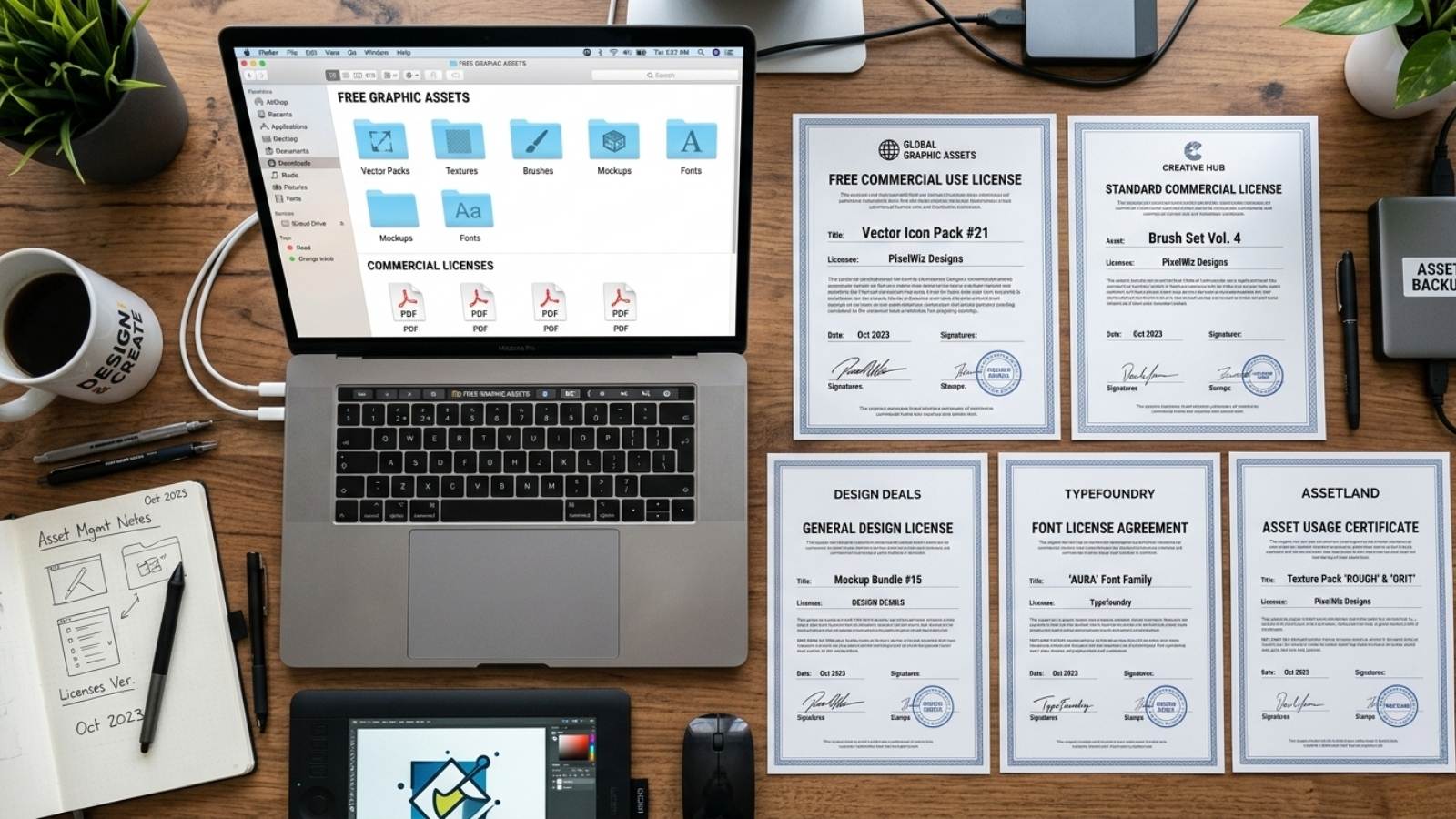
- Archive the License TXT: Every time you download a commercial freebie, save the included PDF or TXT license file directly alongside the graphic asset. If a marketplace ever issues an automated counter-claim, you have the exact legal receipt ready to clear your store instantly.
By treating even your free assets with the same rigorous technical standards as a premium database, you protect your digital storefronts from legal friction while maximizing your early profit margins. Build smart, audit your files, and prepare your infrastructure for high-volume execution.