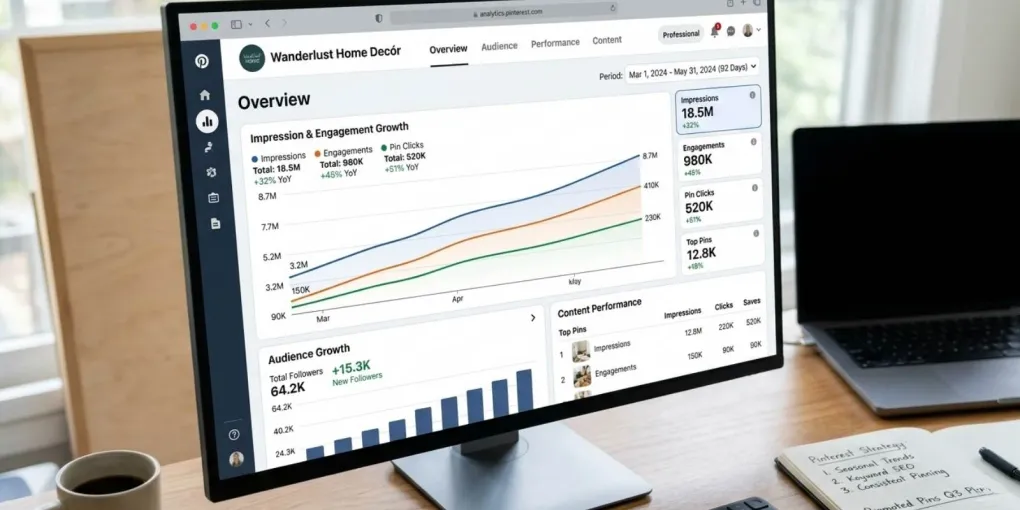
The Pinterest Algorithm for POD: Fresh Pins & Longevity
Many print-on-demand creators treat Pinterest like Instagram or Facebook, expecting instant gratification and quick viral bursts. When they don t see thousands of impressions within 48 hours, they assume their designs are a flop and abandon the platform entirely.
This is a massive strategic mistake. Pinterest is not a traditional social media platform; it is a visual search engine and a long-term virtual real estate asset. To build a sustainable traffic pipeline to your e-commerce storefront or brand without wasting hours of manual labor, you must understand the underlying technical mechanics of the platform’s distribution engine.
Let s break down exactly how to master the Pinterest algorithm for Print on Demand in 2026.
1. The Death of the “Repin” and the Era of the “Fresh Pin”
There is a stubborn myth in the POD community that you can breathe life into an old design simply by saving (repinning) it to a new board or tweaking its title. According to official Pinterest Business Engineering Updates, the algorithm heavily prioritizes Fresh Pins. The distribution engine craves brand-new pixels that its visual detection systems have not indexed before.
If you have an incredible design that failed to gain traction, do not simply duplicate the existing pin or move it around. Instead, you must leverage what professional digital entrepreneurs call the “Cloning Strategy”:
- Change the Context Entirely: Take the core graphic layer and place it into a completely new scene or layout.
- Switch Product Archetypes: If your first pin showcased a flat-lay t-shirt, launch a new one featuring the design rendered on a canvas poster, a hardcover journal, or a matte sticker.
- Modify the Layout Assets: Alter the background textures, update the typography scaling, or adjust the lighting environment from a high-contrast shadow to a soft studio glow.
By presenting a brand-new arrangement of pixels, you grant your design an entirely new cycle of algorithmic visibility in the organic user feeds.
2. The Anatomy of a Pin Lifecycle: Patience as a Technical Asset
Unlike the fleeting 24-hour lifespan of a tweet or an Instagram post, a well-optimized Pinterest pin is an asset that can drive highly targeted traffic to your shop for months or even years after publication. According to e-commerce traffic longevity data analyzed in a comprehensive Piqora study reported by VentureBeat, a single optimized pin can continue to capture conversions significantly longer than a standard social media post.. Understanding its chronological progression is vital to managing your automation queues:
Months 1 2: The Incubation Phase (The Algorithmic Sandbox)
When you publish a brand-new pin, Pinterest places it into a technical “sandbox.” The engine tests the asset on a highly restricted, hyper-specific seed audience to evaluate initial engagement indicators like close-ups and saves. During this initial testing phase, your impression metrics will remain naturally low. This sandbox period is completely normal behavior. The algorithm is simply analyzing early user interactions to determine where your content belongs within its classification charts.
Month 3 and Beyond: The Snowball Effect
If your visual asset successfully captures user attention and triggers saving actions from that initial seed group, the distribution engine opens the wider distribution valves. Your pin enters a compounding growth cycle, gaining organic momentum and scaling its reach over time across related search queries and home feeds.
The Pin Cemetery Rule: Never delete an automated pin that sits at 0 views or low impressions during its first few weeks. Pinterest search traffic is cyclical. An inactive asset can suddenly wake up months down the line due to shifting macro trends, seasonal demands (such as the massive organic surge in Dark Academia or gothic designs during the Autumn and Halloween seasons), or a sudden influx of external contextual traffic from platforms like a structured Tumblr blog.
3. Technical Specifications for the Distribution Engine
To maximize the reach of your bulk uploading pipelines, your visual assets must align perfectly with the technical parameters expected by the Pinterest scraper and visual AI filters.
Exact Dimensions and Ratios
The algorithm favors vertical content. Your images must strictly adhere to a 2:3 aspect ratio. The gold standard resolution is 1000 x 1500 pixels. Deviating from this ratio (such as uploading square 1:1 images or excessively long infographics) results in the algorithm truncating your asset in the feed, which severely drops your click-through rate (CTR).
Character Limits and Truncation Safeties
While Pinterest allows you to input up to 100 characters for your Pin Title, the user interface will truncate anything beyond the first 30 to 35 characters in the standard grid view. Therefore, you must place your core long-tail keywords at the absolute front of your title string. For the description block, you have a 500-character limit, but the first 50 words are what the algorithm reads with highest priority for contextual indexing.
Metadata in the File Native Structure
Before your file even hits the scheduling pipeline, ensure your image filenames are optimized for search engines. The Pinterest backend processes image filenames during the ingestion process. Make sure to rename your image file to something like pinterest-pod-strategy-2026.png before uploading it to your website’s hosting directory. Whether you use Astro, WordPress, or Shopify, the server file name is what the Pinterest crawler processes during the first indexation pass, so choose a descriptive name before hitting ‘publish’
4. The Velocity Metric: The 60-Minute Window
While Pinterest is primarily a search-driven machine, it utilizes a real-time tracking metric known as Initial Velocity. The distribution engine measures the speed and density of user interactions within the first 60 minutes of a pin going live.
If a pin receives immediate saves or close-ups from the users who see it first, the system flags the content as highly engaging and accelerates its distribution curve. For creators running large automated POD pipelines, you can boost this velocity organically by:
- Sharing the direct pin link with a private, internal community or Discord group immediately after posting.
- Cross-linking the pin inside a high-speed, markdown-built blog post to channel immediate external web traffic into the asset.
- Ensuring your pin goes live during the peak activity hours of your target markets typically between 8:00 PM and 11:00 PM EST for the United States audience.
5. Data Analytics: How to Read Metrics Like an Expert
To scale a digital storefront efficiently, you must look past surface-level vanity metrics and focus on clean, verified user data patterns.
The 48-Hour Mirage
Never panic over a sudden, sharp decline in your dashboard statistics over the last two to three days. The Pinterest analytics infrastructure requires up to 72 hours to fully compile, scrub, and verify accurate global traffic data. Base your strategic decisions and automation tweaks on 14-day or 30-day moving averages, never on real-time daily blips.
Decoding Desktop vs. Mobile Behavior
When reviewing your audience insights, pay close attention to device breakdowns. If you notice that close to 50% of your traffic is navigating your content via desktop web browsers rather than mobile applications, you have hit a highly profitable segment. Desktop users demonstrate significantly higher commercial intent in the design space. They are often actively sitting down to plan interior layout projects, browse marketplace storefronts, and complete high-ticket checkouts.
Uncovering Hidden Affinities
Look beyond the immediate boundaries of your specific design niche. If you run a storefront focused on dark academia, library motifs, or tabletop roleplaying artwork, study your audience’s broader affinity charts. You might discover an unexpected cross-interest in classical theater, metal crafting, or independent bookbinding.
To see how we align these design categories within our own web architecture, feel free to explore our complete Print on Demand niche structuring guide. By analyzing these hidden data points, you can construct your next complementary collection or expand your keyword clusters before your competitors spot the trend.
FAQ: Mastering the Pinterest Algorithm for POD
How long does it take for a new Pinterest pin to get views?
Typically, it takes between 1 to 3 months. The algorithm places new pins into a structural “sandbox” to test user interaction rates with a small seed audience before opening the distribution valves for broader search queries.
Are repins dead for organic SEO?
Yes. For driving fresh organic reach, traditional repinning has minimal impact. The algorithm strongly prioritizes “Fresh Pins” meaning brand-new visual files with unique pixel arrangements. Always render a new image variant instead of saving an identical asset repeatedly.
Does Pinterest favor video Pins over static images?
Video pins frequently enjoy a 20% to 30% higher initial distribution wave in the home feed, making them excellent for rapid brand awareness. However, static image pins retain a significantly longer traffic lifespan within search engine results pages. A balanced workflow should leverage both formats.
Conclusion: Building a High-End Digital Vitrine
Print on Demand on Pinterest is not a high-speed sprint, nor is it a noisy flea market where the loudest voice wins temporary sales. It is the steady, deliberate construction of a premium digital boutique in a high-traffic historic district. By consistently publishing fresh pixel configurations, respecting the technical asset guidelines, and understanding long-term user behavior trends, you convert your visual outputs into permanent real estate assets that compound your traffic value day after day.
Frequently asked questions
How long does it take for a new Pinterest pin to get views?
Typically, it takes between 1 to 3 months. The algorithm places new pins into a structural 'sandbox' to test user interaction rates with a small seed audience before opening the distribution valves for broader search queries.
Are repins dead for organic SEO?
Yes. For driving fresh organic reach, traditional repinning has minimal impact. The algorithm strongly prioritizes 'Fresh Pins' meaning brand-new visual files with unique pixel arrangements. Always render a new image variant instead of saving an identical asset repeatedly.
Does Pinterest favor video Pins over static images?
Video pins frequently enjoy a 20% to 30% higher initial distribution wave in the home feed, making them excellent for rapid brand awareness. However, static image pins retain a significantly longer traffic lifespan within search engine results pages. A balanced workflow should leverage both formats.
More from this series