Tumblr Storytelling: The 80/20 Rule for POD Sales Without Ads
Let me tell you a hard truth I learned the hard way.
For months, I treated social media like a digital megaphone. I posted product shots. I wrote “Buy now” captions. I linked directly to my Redbubble store. And I watched my engagement and my sales stagnate.
People don’t go on social media to be sold to. They go to be inspired, entertained, and connected.
The moment I stopped acting like a street vendor and started acting like an archivist of a secret library, everything changed. My engagement skyrocketed. My followers became genuinely invested in my brand. And sales started flowing not because I shouted louder, but because I told better stories.
This is the power of the 80/20 rule applied to micro-blogging. Let me show you exactly how I built a loyal POD community on Tumblr without spending a dime on ads.
1. Why Tumblr? The Underrated Power of Micro-Blogging
Most POD sellers ignore Tumblr. They focus on Instagram, TikTok, or Facebook the loud, algorithm-driven platforms where content dies in 24 hours.
That’s a massive mistake.
Tumblr is different. It’s a hybrid of a blogging platform and a social network, designed for visual storytelling and community building. It’s where aesthetic movements are born Dark Academia, Cottagecore, Witchcore, and countless other subcultures that are perfect for print on demand.
Here’s why Tumblr works for POD:
- Visual First: Tumblr is built for images. Your designs will be seen in their full aesthetic glory.
- Niche Communities: Tumblr users self-organize around specific interests. Find your niche, and you find your customers.
- Long-Form Content: Unlike Instagram’s caption limit, Tumblr allows you to write rich, narrative-driven posts that build deep connections.
- Evergreen Traffic: Tumblr posts rank on Google. A well-written lore post can drive traffic for years.
- Low Competition: Most POD sellers are on Instagram. Tumblr is a blue ocean.
The key is to stop treating Tumblr as a sales channel and start treating it as a storytelling platform.
2. The 80/20 Rule: Sell Without Selling
The 80/20 rule is simple: 80% of your content should provide value educating, entertaining, or inspiring your audience. Only 20% should directly promote your products.
Applied to Tumblr, this means:
- 80% Lore & Atmosphere: Beautiful images, mysterious stories, historical “facts,” mood boards, poetry, or philosophical musings that build your brand’s world.
- 20% Product Links: A subtle, contextual link to your store at the end of a post, framed as an invitation rather than a demand.
Why This Works
When you lead with value, you build trust and emotional connection. Your audience doesn’t see you as a seller they see you as a curator, a storyteller, a fellow enthusiast.
When you finally do share a product link, it doesn’t feel like an ad. It feels like a natural extension of the world you’ve built. “Oh, I can actually own this piece of the archive?”
This approach converts at a much higher rate than aggressive advertising because the buyer already feels connected to your brand before they even see the price tag.
3. Building Your Brand’s “Lore” (The Arcane Archives Method)
When I pivoted to The Arcane Archives, I didn’t just change my designs. I changed my entire narrative framework.
Instead of selling t-shirts, I started selling artifacts.
The Framework
Every product in my collection is presented as a fragment from a fictional world. Here’s how I structure each lore post:
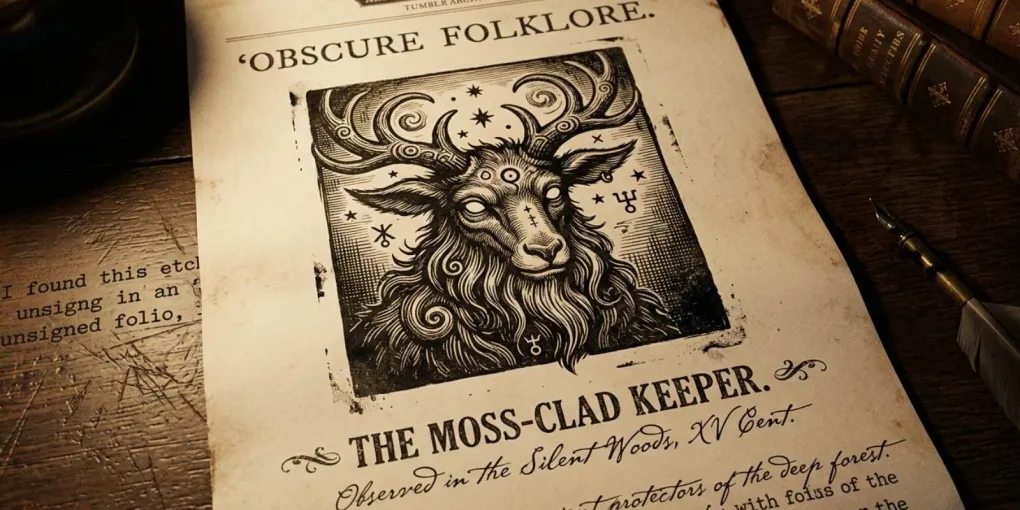
Step 1: The Visual I post a high-quality, aesthetic image of the design preferably a lifestyle mockup showing the product in a curated environment (as discussed in our AI Mockup guide).
Step 2: The Story I write 150-300 words of atmospheric, mysterious text. It might be:
- The “history” of the creature or symbol depicted.
- A fictional journal entry from an archivist who discovered the artifact.
- A poetic meditation on the themes the design evokes.
Step 3: The Invitation At the very end, a single line like:
“This relic is available for adoption in The Arcane Archives.”
…with a discreet link to the product page.
Example: The Triple-Eyed Feline
Instead of posting: “New black cat t-shirt available now! Link in bio!”
I posted:
“The Triple-Eyed Feline is no ordinary familiar. Legends whisper that cats bearing the third mark were once guardians of the veil between worlds their nine lives a mere reflection of the infinite secrets they carry. This woodcut engraving, rendered in deep black ink on antique parchment, captures the moment of awakening. Will you invite this guardian into your archive?”
The result? Hundreds of notes, dozens of reblogs, and a steady stream of sales all from a single post that never once said “buy this t-shirt.”
4. The Tumblr SEO Advantage
One of the most overlooked benefits of Tumblr is its search engine authority. Tumblr is a high-domain-authority platform that Google trusts. When you post quality content with proper keywords, it ranks.
How to Optimize Your Tumblr Posts for SEO
- Use Relevant Tags: Tumblr allows up to 20 tags per post. Research popular tags in your niche and use them strategically. For Dark Academia, tags like
#dark academia,#gothic aesthetic,#book lover, and#vintage artare essential. - Write Descriptive Titles: Your post title is what appears in Google search results. Make it compelling and keyword-rich.
- Include Alt Text: Just like on Pinterest, alt text helps search engines understand your images.
- Post Consistently: Regular posting signals to both Tumblr’s algorithm and Google that your blog is active and relevant.
- Link Internally: Link back to your own blog (your Astro site) to pass authority and create a traffic loop.
The Traffic Loop Strategy
Here’s the ecosystem I’ve built, structured as a simple, effective funnel:
- Tumblr Post (Lore + Image): Share an atmospheric story and a beautiful visual.
- ** Link to Astro Blog (Full Article):** Send engaged readers to your own domain for the complete guide.
- ** Link to Product Page (Redbubble / Printful):** From the blog, guide warm leads to the store.
- ** Sale + New Follower:** The reader purchases and becomes a loyal community member.
This loop does three things:
- It warms up the buyer with storytelling before they see a price.
- It sends traffic to your own domain (building your site’s authority).
- It creates multiple touchpoints that increase the likelihood of conversion.
As we explored in our Pinterest Algorithm guide, this layered approach dramatically increases dwell time and signals quality to search engines.
5. Community Building: From Followers to Evangelists
The ultimate goal of the 80/20 storytelling strategy isn’t just to make a sale it’s to build a community of evangelists who will promote your brand for you.
How to Cultivate a Loyal Following
1. Engage Authentically Don’t just post and disappear. Reply to comments. Reblog content from other creators in your niche. Tumblr is a community, not a broadcast channel.
2. Create Shareable Content Posts that evoke emotion wonder, mystery, nostalgia are more likely to be reblogged. Each reblog is free advertising.
3. Be Consistent with Your Aesthetic Your Tumblr blog should feel like an extension of your brand. Use the same color palette, typography, and visual style across all your posts. This builds instant recognition.
4. Offer Value Beyond Products Share mood boards, reading lists, playlists, or behind-the-scenes content. Give your audience a reason to follow you beyond just wanting to buy something.
The Snowball Effect
When your followers feel genuinely connected to your brand, they become advocates. They reblog your posts, share them with friends, and defend your brand in comments. This organic word-of-mouth is priceless and it scales without costing you a cent.
6. My Tumblr Workflow (Step-by-Step)
Here’s the exact process I use to maintain my Tumblr presence without spending hours every day:
- Batch Content Creation: I dedicate one day per week to creating all my Tumblr content images, lore text, and product links.
- Schedule Posts: I use Tumblr’s native scheduling feature to queue posts for the week. Consistency is key.
- Engage Daily: I spend 10-15 minutes each day replying to comments and reblogging content from my community.
- Track Performance: I monitor which posts get the most notes and adjust my content strategy accordingly.
- Link to New Content: Whenever I publish a new article on my Astro blog, I create a Tumblr post that teases it with a link back.
This workflow takes about 2 hours per week total and generates consistent, passive traffic to my store.
Conclusion: From Seller to Storyteller
The days of shouting “Buy my t-shirt” into the void are over. Consumers are saturated with ads. They’ve developed ad-blindness. What they crave is connection, authenticity, and meaning.
By embracing the 80/20 rule and using Tumblr as a storytelling platform, you transform your POD business from a transactional storefront into a living, breathing world that people want to be part of.
You stop being a seller. You become a curator, an archivist, a storyteller. And when people care about your story, they don’t just buy your products they become your most passionate advocates.
Start small. Write one lore post this week. Share one beautiful image. Tell one story. And watch what happens when you stop selling and start connecting.
Disclosure: Some of the links in this article are affiliate links. This means I may earn a small commission if you make a purchase, at no extra cost to you. I only recommend tools I personally use and trust.
Frequently asked questions
What is the 80/20 rule in social media marketing?
The 80/20 rule means 80% of your content should educate, entertain, or inspire your audience building connection and trust. Only 20% should directly promote your products. This approach converts better than aggressive advertising.
Why use Tumblr for print on demand marketing?
Tumblr is a visual, community-driven platform where aesthetic niches thrive. Unlike Instagram or Facebook, Tumblr rewards authentic storytelling and long-form content, making it perfect for building a brand narrative around your POD products.
How do I create lore for my POD brand?
Write short, mysterious stories about your designs. Treat each product as an artifact from a fictional world. Describe its origin, its purpose, or the creature it represents. This transforms a simple t-shirt into a collectible piece of art.
Can Tumblr really drive sales for a POD business?
Yes. When you build a community that cares about your aesthetic world, they become evangelists. They reblog your content, share it with friends, and eventually purchase because they feel connected to your brand not because you shouted at them.
More from this series