Visual Niche Blueprint: Build a Recognizable POD Brand
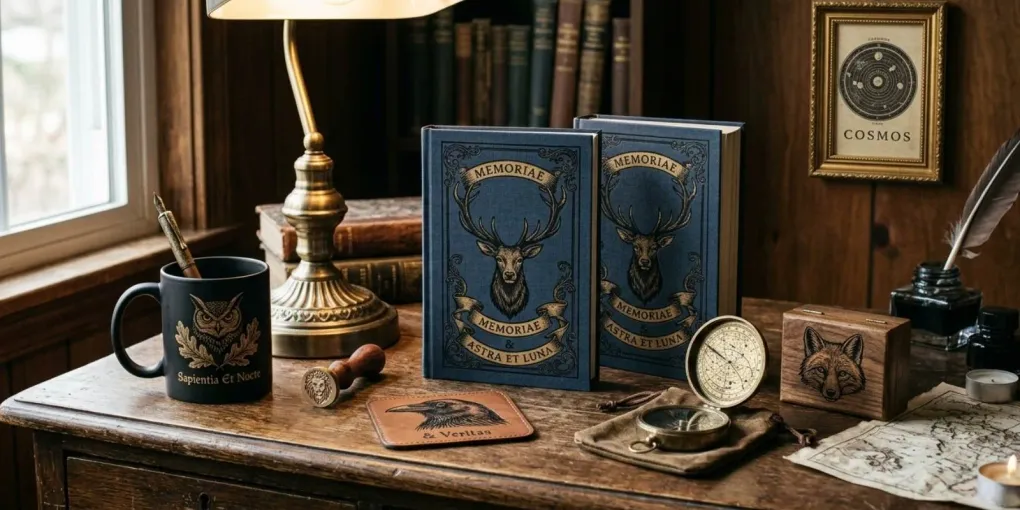
Imagine walking into a boutique where every product every t-shirt, every poster, every notebook feels like it belongs to the same mysterious world. The colors whisper the same story. The illustrations share the same hand. The fonts echo the same century.
Now imagine walking into a flea market where t-shirts scream random slogans in neon colors, competing for attention like desperate street vendors.
Which store would you trust with your credit card?
In 2026, the generic, scattershot approach to print on demand is a death sentence. Marketplace algorithms and consumers alike have evolved. They now reward focus, coherence, and intentionality. To build a sustainable brand, you must stop designing random t-shirts and start building a visual world.
Let me show you exactly how to construct that world.
1. The Three-Layer Constraint System
Before you open your design software, you must lock in three foundational pillars. These aren’t suggestions they are hard rules that will define every asset you ever produce.
Layer 1: The Style Constraint
Your illustration style is the DNA of your brand. Choose one specific technique and master it. For premium, timeless aesthetics, consider:
- 17th-Century Woodcut / Engraving: Heavy cross-hatching, stark contrasts, no gradients.
- Vintage Botanical Illustration: Fine lines, scientific accuracy, neutral tones.
- Art Deco Geometry: Bold shapes, metallic accents, symmetrical layouts.
Why this matters: When every design shares the exact same hand-rendered style, your catalog stops looking like a collection of random graphics and starts looking like an art exhibition.
Layer 2: The Theme Constraint
Your theme is the story you tell. It’s the cultural or subcultural reference point that resonates with your target audience.
For The Arcane Archives, we chose a layered intersection:
- Dark Academia: Scholarly, mysterious, gothic libraries and ancient texts.
- Gothic Macabre: Skulls, moths, occult symbols, memento mori.
- TTRPG (Tabletop Role-Playing): Polyhedral dice, dungeon masters, fantasy lore.
By layering these three subcultures, we created a unique visual space with low keyword difficulty and intense buyer intent. You can’t compete with Nike, but you can absolutely dominate the intersection of library aesthetics and gaming collectors.
Layer 3: The Color Palette Constraint
This is the easiest rule to enforce and the easiest to break. Limit your palette to 2 or 3 colors maximum.
For our collection, we enforce:
- Primary: Deep jet-black ink (100% K).
- Secondary: Pure white or unbleached antique paper background.
- Accent (Premium): Metallic antique gold (spot color).
No gradients. No pastels. No neon. Every product, from a t-shirt to a sticker to a canvas poster, adheres strictly to this palette. The result? An instantly recognizable, premium, cohesive catalog that looks expensive even before a customer reads the price.
2. Case Study: Dark Academia + TTRPG
Let’s put this framework into practice. We layered our three aesthetic pillars Dark Academia, Gothic Macabre, and TTRPG to create a collection that speaks directly to a passionate, underserved audience.
The Dark Academia Foundation
We started with a broad, safe, trademark-free movement: Dark Academia. This aesthetic is built on:
- Visual Cues: Libraries, candlelight, vintage clothing, classical architecture.
- Emotional Cues: Nostalgia, mystery, intellectualism, romanticism.
By grounding our brand in this movement, we instantly signaled to a massive audience (millions of US/UK consumers) that our products belonged to their visual world.
The TTRPG Crossover
Next, we introduced the gaming element but not as a generic “D&D” sticker. Instead, we recontextualized TTRPG symbols through a scholarly lens:
- A D20 die was transformed into a 17th-century alchemical engraving.
- A mimic was rendered as a mysterious beast from an ancient bestiary.
- A dungeon master was styled as a cloaked archivist.
Why this works: It bypasses IP restrictions, it feels original, and it speaks directly to a buyer who loves both Dark Academia and TTRPG a highly engaged, high-spending demographic.
3. The Automation Advantage of Aesthetic Constraints
Beyond consumer-facing brand equity, enforcing strict artistic rules provides a massive operational benefit to your production pipeline.
Seamless Cross-Product Scaling (The Matrix Effect)
When your design portfolio shares a unified color space and illustration archetype, scaling one core graphic across multiple physical items becomes fully automated.
A single woodblock-style illustration can seamlessly adapt to:
- A centered chest graphic on a premium heavy hoodie.
- A full-cover print on a hardcover linen notebook.
- A high-contrast die-cut vinyl sticker.
- A matte-finish gallery wall art poster.
Because the art relies on clean, high-contrast vector layers (rather than complex multi-colored rasters), background isolation and file processing speeds increase by over 300%. What used to take 30 minutes per design now takes 30 seconds.
Standardizing the Production Pipeline
By utilizing uniform design parameters, you can build highly optimized macro actions or custom presets within your asset management setups:
- File naming structures become standardized.
- Tag pools remain clean and reusable.
- Bulk upload pipelines operate with machine efficiency.
This saves you dozens of hours every week hours you can reinvest into storytelling, strategy, and engaging with your audience.
4. The Double SEO Advantage of Topical Architecture
Building a niche collection is not just a visual strategy; it is a core mechanism for ranking on modern search engines.
As outlined in Google’s SEO Starter Guide, search engine web crawlers seek out semantic clusters to verify your site’s contextual expertise.
When your blog consistently publishes long-form technical guides alongside specific product listings, you form a powerful Topical Authority Silo.
If a search engine discovers that your site ranks for hyper-targeted terms like:
- “gothic woodblock print design”
- “dark academia apparel collection”
- “ttrpg aesthetic merchandise”
It assumes greater authority when you launch new products targeted at those exact search spaces. You aren’t fighting for generic “t-shirt” keywords you’re owning an entire niche vocabulary.
Furthermore, this internal consistency fuels your external marketing funnels. As we explored in our deep-dive blueprint on Pinterest SEO and asymmetric AI mockups, your visual assets can dominate long-tail Google Images queries because your alt texts, metadata strings, and landing page keywords share the exact same semantic markers.
5. How to Find YOUR Unique Visual Niche
You don’t have to copy my Dark Academia formula. Here’s a practical framework to discover your own visual world:
Step 1: Map Your Subcultures
List 3-5 subcultures or aesthetic movements you are genuinely passionate about. Examples:
- Cottagecore, Steampunk, Witchcore, Cyberpunk, Minimalism, Tropical Kitsch, Vintage Travel, Sci-Fi Retro.
Step 2: Find the Intersection
Overlay them. Where do they overlap? The magic happens in the intersection. Cottagecore + Sci-Fi = Solarpunk. Dark Academia + TTRPG = Arcane Archives. Vintage Travel + Steampunk = Airship Adventures.
Step 3: Lock the Visual Rules
Once you have your intersection, define:
- Style: Hand-drawn, vector, photographic collage?
- Colors: 2-3 max. What are they?
- Typography: Serif, sans-serif, handwritten?
- Subject Matter: What specific objects, animals, or symbols appear consistently?
Step 4: Validate with Data
Before spending weeks designing, use tools like Podly to verify search volume and competition. Is there demand? Is the market saturated? Adjust accordingly.
Conclusion: From Random Graphics to Curated Archives
The print-on-demand landscape of 2026 rewards focus. The era of the generalist storefront is over. To break through the noise, you must abandon random t-shirts and embrace the power of a visual world.
Define your style. Lock your palette. Choose your theme. And apply these rules to every single asset you produce. You’ll build a brand that is instantly recognizable, emotionally resonant, and most importantly defensible in a crowded market.
Disclosure: Some of the links in this article are affiliate links. This means I may earn a small commission if you make a purchase, at no extra cost to you. I only recommend tools I personally use and trust.
Frequently asked questions
What is a visual niche in print on demand?
A visual niche is a cohesive aesthetic world built around strict artistic constraints style, color palette, and theme. It makes your brand instantly recognizable and builds emotional connection with buyers.
How do I choose a color palette for my POD brand?
Limit yourself to 2-3 colors maximum. For high-end aesthetics, black ink on antique paper or metallic gold backgrounds create a premium, cohesive look that translates well across apparel, posters, and accessories.
Why is a cohesive collection better than random t-shirts?
A cohesive collection builds brand recognition, increases customer lifetime value through cross-selling, and signals authority to search engines. Random designs create a 'flea market' impression that kills conversion rates.
How do visual constraints help with automation?
When all your designs share the same color space and style, scaling one graphic across multiple products (t-shirts, notebooks, stickers, posters) becomes fully automated. File processing speeds increase by over 300%.
More from this series